
In the realm of canine welfare and public safety, breed-specific legislation (BSL) has often been proposed as a solution to mitigate risks associated with certain dog breeds commonly linked to fighting or aggression. However, a closer examination rooted in ethological principles and behavioral science reveals that such measures overlook the fundamental drivers of these issues: human behavior, animal abuse, and criminal activity. As a professional dog trainer with decades of hands-on experience observing and addressing canine behaviors in real-world settings, I've seen firsthand how breed alone rarely determines outcomes—it's the environment, socialization, and owner responsibility that shape a dog's actions. This article explores why banning breeds doesn't address the problem, drawing on established research and practical insights to advocate for more effective, behavior-focused approaches.
The Limitations of Breed-Specific Legislation
BSL typically restricts or prohibits ownership of breeds perceived as dangerous, such as those historically associated with dog fighting. Yet, studies from recent years indicate that these laws do not significantly reduce dog bite incidents or related hospitalizations. For instance, a 2024 analysis of emergency department visits in Missouri found no reduction in dog bite injuries attributable to breed-discriminatory laws. Similarly, broader reviews conclude that BSL is ineffective, as it fails to account for individual dog behavior and owner factors.
One key reason BSL falls short is the adaptability of those involved in illegal activities. Criminals engaged in dog fighting can readily introduce or create new breeds that evade bans. Consider the Bully Kutta, a large mastiff-type dog originating from Pakistan, often used in underground fighting rings due to its size and strength.

This breed, resembling an oversized pit bull terrier, has gained notoriety in regions where traditional fighting breeds are restricted. Similarly, the Guatemalan Bull Terrier (also known as the Dogo Guatemalteco), a molosser-type dog bred for guarding, has been noted in contexts where breed mixing circumvents regulations.
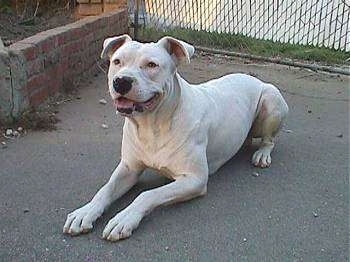
The Gul Dong, another Pakistani breed historically used for hunting, guarding, and fighting, exemplifies how crossbreeding sustains these practices.
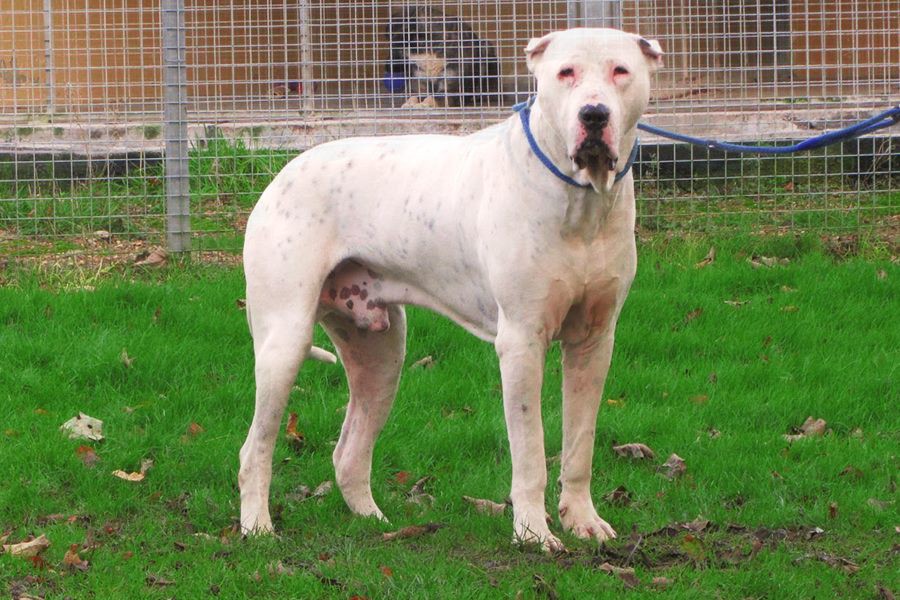
And the Indian Bull Terrier (or Gull Terrier), prized for its gameness in some regions, further illustrates the ease of developing variants through selective breeding.

These examples demonstrate that banning one breed simply prompts the creation of another—such as by crossing fighting breeds or other breeds—to fill the void.
Historical precedents reinforce this point. In Italy, legislation once restricted 92 dog breeds in an effort to curb dangers, but such expansive bans were later repealed or scaled back due to their impracticality and lack of impact on underlying crimes. Despite these measures, organized dog fighting persists in various regions, underscoring that the problem lies not in the dogs themselves but in the syndicates that exploit them.
Shifting Focus to Root Causes: Animal Abuse and Criminal Enforcement
Instead of targeting breeds, effective strategies should prioritize combating animal abuse and holding irresponsible owners accountable. Dog fighting is an illegal blood sport driven by criminal networks, and addressing it requires robust enforcement of anti-cruelty laws, anti-tethering regulations, and measures against illegal breeding. Breed-neutral laws that emphasize owner education, responsible dog legislation that is fair to everyone including the dogs, and community resources have shown promise in reducing incidents without discriminating against specific dogs. For example, strengthening investigations onto organized crime and penalties for animal fighting can disrupt syndicates at their source.
This isn't to downplay the seriousness of dog-related risks—safety is paramount. However, focusing on breeds rather than what people do with them ignores the nuanced interplay of genetics, environment, and human influence (especially crime), as noted in comprehensive reviews. In practice, I've helped owners implement action pathways and enrichment recommendations that transform "problem" dogs into well-adjusted companions, proving that change comes from addressing needs, not imposing bans.
For complex cases there are always many factors to consider.
Disclaimer
This article isn’t legal or medical advice; those are not areas of expertise. It is provided for informational purposes only, based on ethological and behavioral principles.
Bibliography
- Raghavan, M., Martens, P. J., Chateau, D., & Burchill, C. (2013). Effectiveness of breed-specific legislation in decreasing the incidence of dog-bite injury hospitalisations in people in the Canadian province of Manitoba. Injury Prevention, 19(3), 177–183. https://doi.org/10.1136/injuryprev-2012-040389
- Nilson, F., Damsager, J., Lauritsen, J., & Bonander, C. (2018). The effect of breed-specific dog legislation on hospital treated dog bites in Odense, Denmark—A time series intervention study. PLoS ONE, 13(12), e0208393. https://doi.org/10.1371/journal.pone.0208393 (Note: Foundational, though pre-2015, for context on early evaluations.)
- American Veterinary Medical Association. (n.d.). Why breed-specific legislation is not the answer. Retrieved December 21, 2025, from https://www.avma.org/resources-tools/pet-owners/dog-bite-prevention/why-breed-specific-legislation-not-answer
- Watson, B. (2024). Are breed bans an effective tool in preventing dog bites? A case study. Golden Gate University Law Review Capstone Papers. Retrieved from https://digitalcommons.law.ggu.edu/cgi/viewcontent.cgi?article=1094&context=capstones
- Essig, G. F., Shearer, C. M., & Cambiano, R. L. (2024). Emergency department visits for dog bite injuries in Missouri municipalities with and without breed-specific legislation: A 20-year ecological study. Frontiers in Public Health, 12. https://doi.org/10.3389/fpubh.2024.1354698
- American Society for the Prevention of Cruelty to Animals. (n.d.). Are breed-specific laws effective? Retrieved December 21, 2025, from https://www.aspcapro.org/resource/are-breed-specific-laws-effective
- Hoffman, C. L. (2025). How changing portraits and opinions of “pit bulls” undermined breed-specific legislation in the United States. Animals, 15(14), 2083. https://doi.org/10.3390/ani15142083
- Miklósi, Á. (2014). Dog behaviour, evolution, and cognition (2nd ed.). Oxford University Press. (Foundational for ethological insights.)
- Coppinger, R., & Coppinger, L. (2001). Dogs: A startling new understanding of canine origin, behavior & evolution. Scribner. (Foundational on breed evolution.)
- Winkler, A. (n.d.). Ethological approaches to K9 training. Retrieved December 21, 2025, from https://rivannak9services.com (General reference to ethological training principles.)
- Sam the Dog Trainer. (n.d.). Understanding canine behavior. Retrieved from https://samthedogtrainer.com/understanding-canine-behavior
- Pooch Master Blog. (n.d.). Ethology in dog training. Retrieved from https://poochmaster.blogspot.com/ethology-in-dog-training
This article incorporates AI-assisted drafting based on the BASSO METHOD framework and has been reviewed for accuracy, alignment with ethological principles, and adherence to these parameters.


No comments:
Post a Comment